Why a cold makes you feel ill
Inflammatory signalling is cells sending chemical messages that change what other cells do. The response helps coordinate defence, but also produces much of the discomfort.
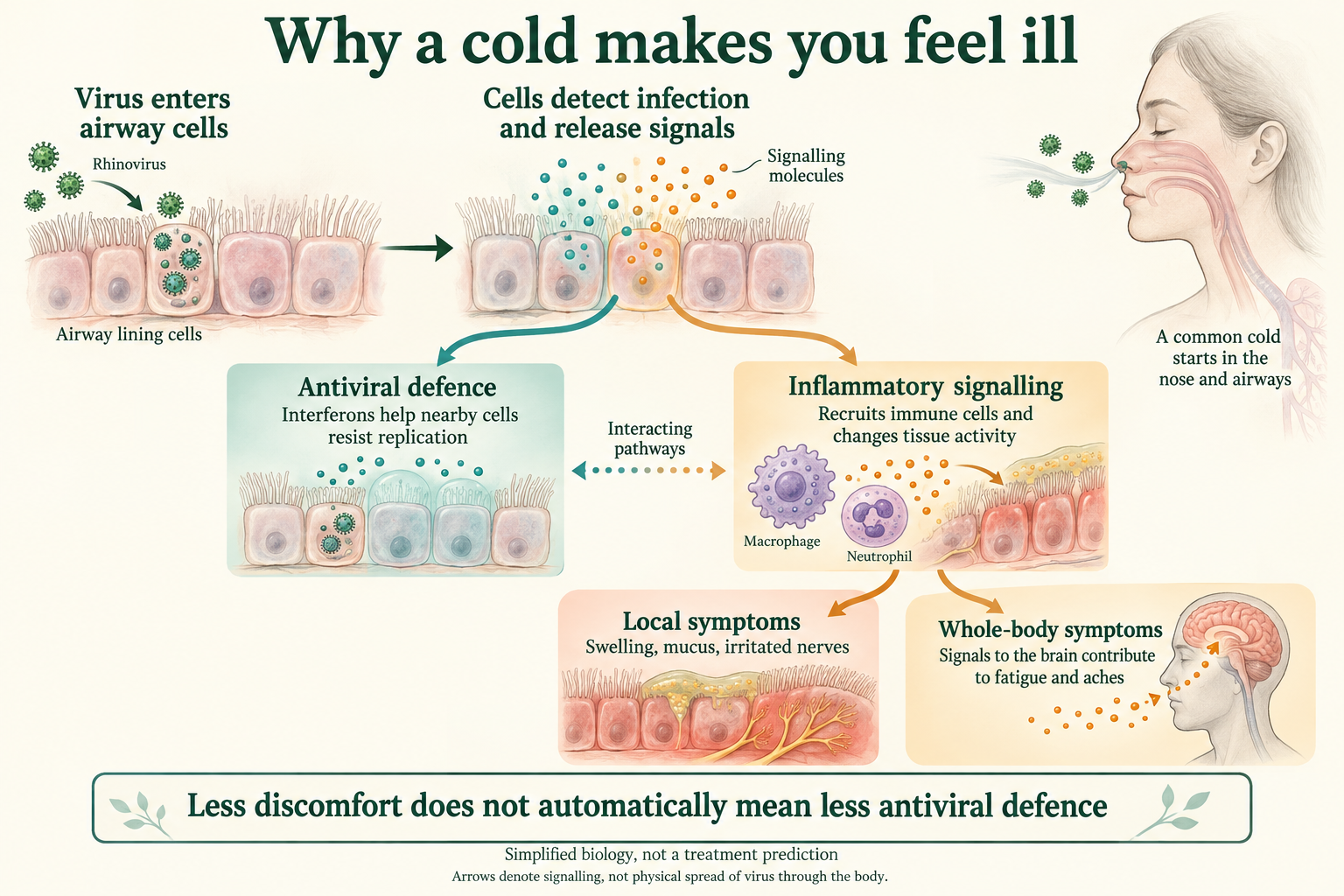
- Detect and message
- Airway cells detect viral material and release cytokines: protein messages that bind to receptors on other cells. Chemokines are a group of these messages that attract immune cells.
- Resist and recruit
- Interferons induce antiviral activity in nearby cells. Inflammatory signals recruit and activate immune cells. These pathways interact; “the immune response” is not one on/off switch. Cell-study evidence.
- Feel the response
- Inflammatory mediators affect blood vessels, secretions and sensory nerves, contributing to congestion and soreness. Immune-to-brain signalling contributes to fatigue and aches; feeling ill throughout your body does not mean the virus is everywhere. Symptom mechanisms.
Does easing symptoms weaken the defence?
Not automatically. Ibuprofen reduces prostaglandin production, affecting pain, fever and inflammation; it does not simply switch off every antiviral pathway. Other cold medicines act differently, so they cannot be treated as one intervention.
Trials of anti-inflammatory painkillers found some relief of headache and muscle or joint pain, but no clear change in cold duration. That is neither proof of zero immune effects nor evidence that ordinary symptom relief generally prolongs a cold. Cochrane evidence review.
Feeling better, controlling the virus and recovering faster are different outcomes. The model above does not simulate medicines.